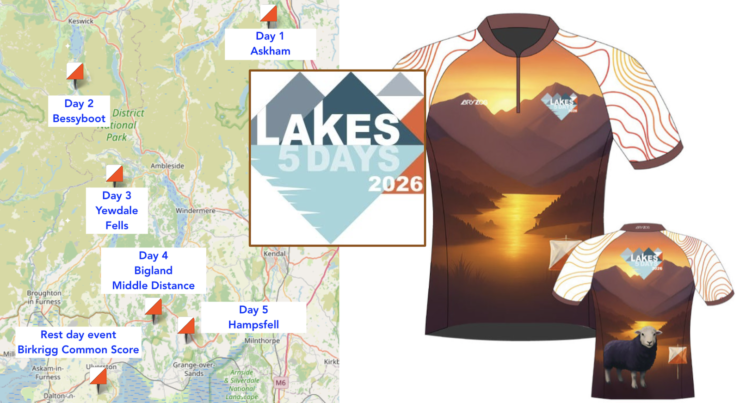
Twenty Club members took part in the quadrennial event with stages across the Lake District
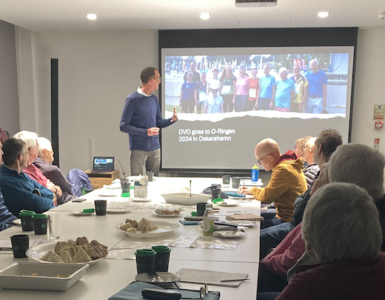
Sal Calland has written recently about the Swedish O-ringen, an annual 5-day event in Sweden that began in 1965. The UK has its own equivalent, rotating around Scotland, Wales and England. The first ever Scottish 6 days took place in 1977, and thereafter every 2 years (odd-numbered years). At some point in the intervening years (even-numbered), the Welsh 5 days and Lakes 5 days began to alternate.
Podium places were achieved by a lucky/skilled few:
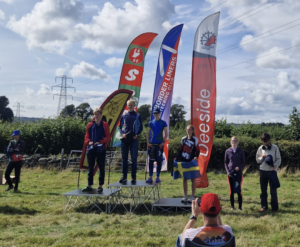
- Sal Calland W50S 1st
- Jessica Williams W18S 1st
- Dave Skidmore M80S 1st
- Richard Parkin M55L 3rd
Very well done to you all! Results here, fortunately only the best 3 runs counted.
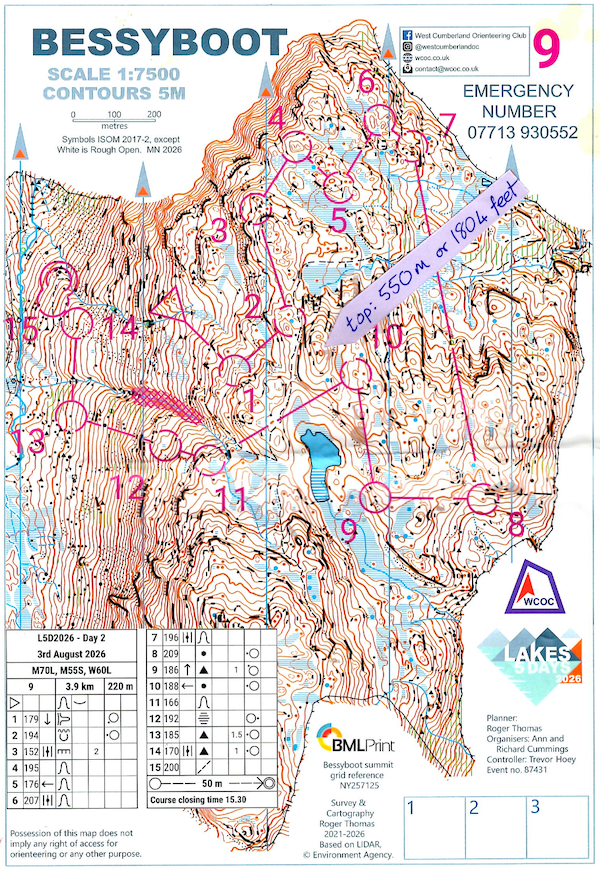
We (the Chaffeys) have been lucky enough to attend most of the Lakes 5 day competitions, as Sal has family in Windermere. We’d run on some of the areas several times before, but they still provided a challenge! Bessyboot on Day 2, however, was a new area, a mountain top in the head of Borrowdale.
Day 1 first, at Askham Common. This was by far the easiest of the five areas, with great long-distance visibility, and a slight breeze to curb the ferocious heat. Because the area was shortish grass with just a little bracken, we were allowed to run in shorts. I had my best run of the week, and was 7th on W60L.
Day 2 at Bessyboot was over an hour’s drive upto Kewsick and along the shores of Derwent Water – allegedly the wettest place in England. We parked at Rosthwaite and walked 1.2km to Assembly followed by a further 2km with near vertical climb to the Start. It took me 50 minutes, and inevitably I was late, but it didn’t matter as punching starts added to the relaxed vibe! I had quite a good run, but lost time on Leg 7–8 veering too far east and taking 23 minutes (note to self: follow a careful bearing when exiting the control).
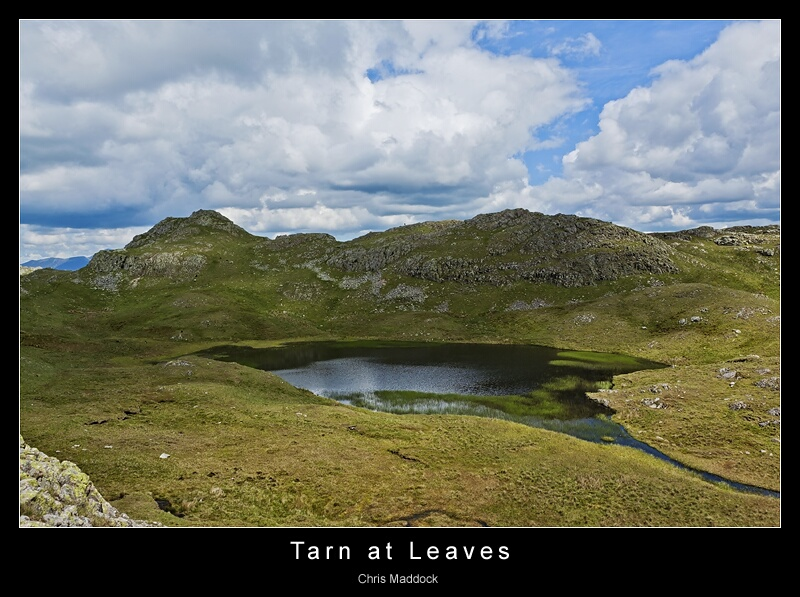
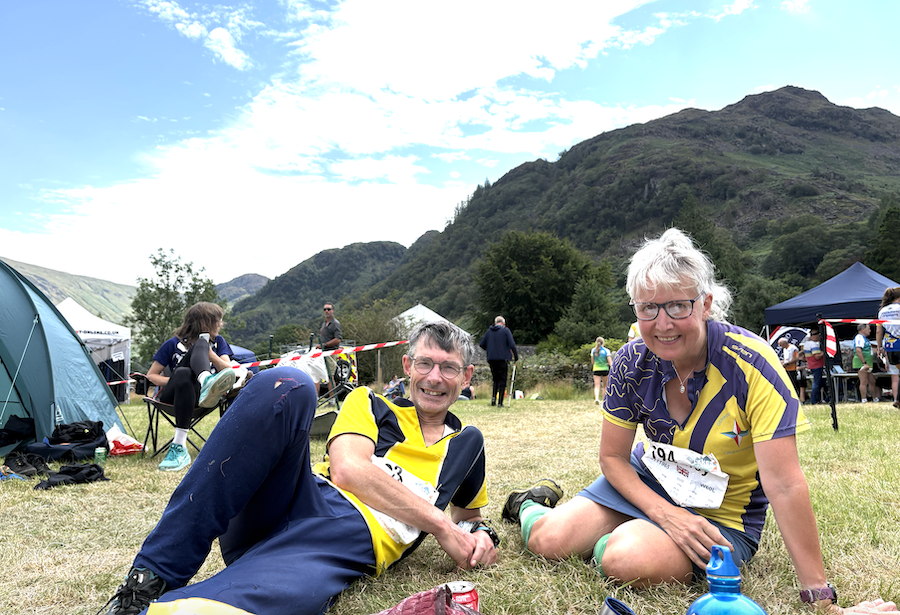
Day 3 dawned wet and misty. To quote Craig Raine (A Martian Sends a Postcard Home; 1979), the hills in the mist looked like “engravings under tissue paper”. There was quite a queue to get into the parking field, as the turn needed you to reverse before executing. At least we had late starts, which meant the visibility was vastly improved! This was another high-fell day, on moorland at an altitude of 300–400m.
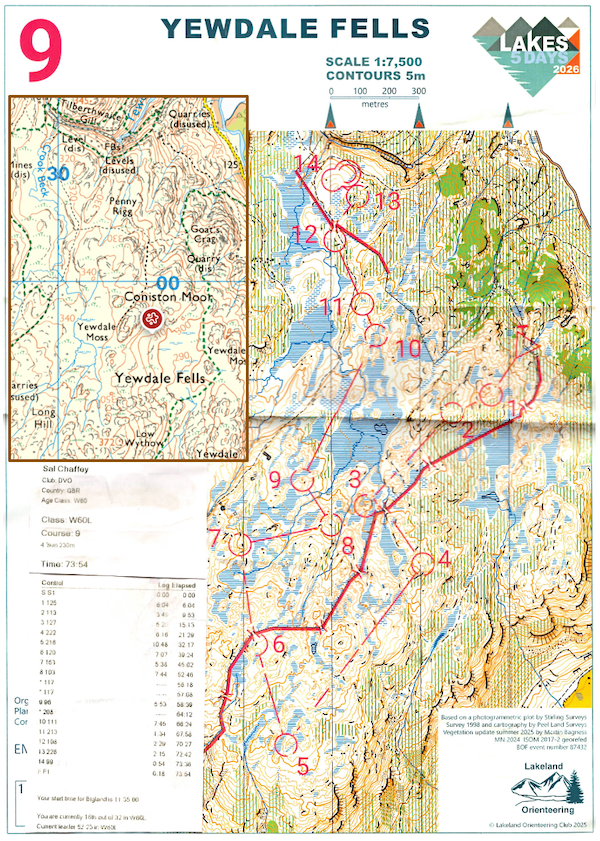
My Strava comment was “Okay but some sloppy mistakes – think I’m getting tired!” and the splits show that I visited some controls that weren’t on my course, which is never a good sign!
Day 4 was (for me) a horror-show middle distance at Bigland where I took 74 minutes for 2.7km. The main error was a 300m leg that I overshot by a further 300m, taking 22 minutes! Near the end, I went to 10 before 9, but realised and reversed my bearing, went to 9, and used the same bearing a third time to find 10 for the second time. That my glasses are still in that forest from the JK Relays 2025 should have told me something!
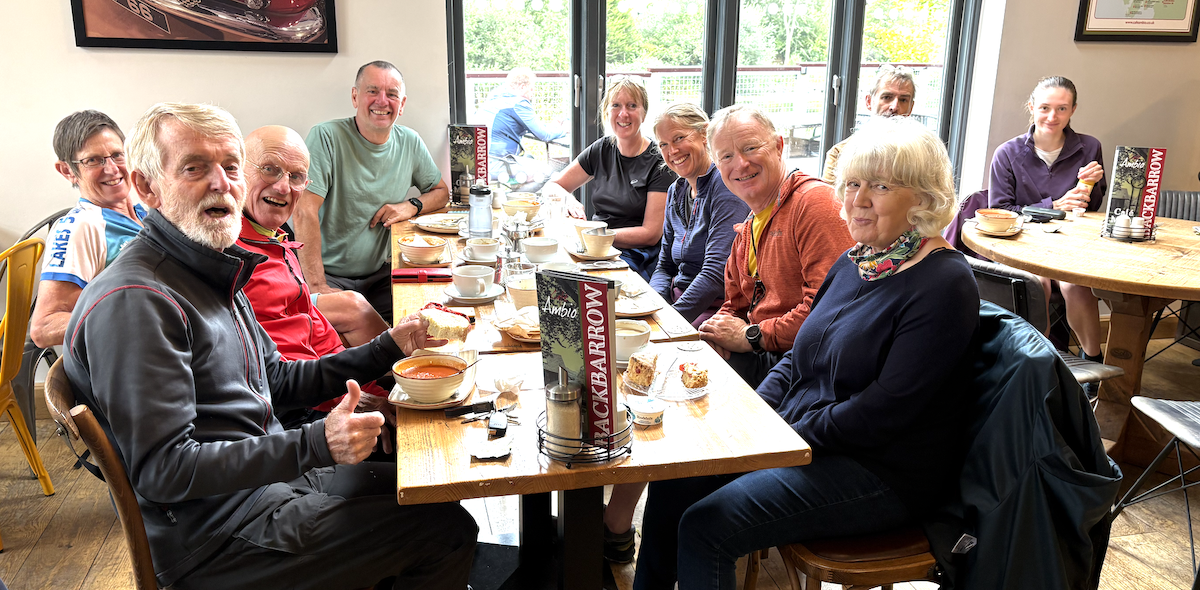
We had a DVO meet-up at Cafe Ambio at the Lakeland Motor Museum after the race, where much venting was done! Trivia: the address is Old Blue Mill, referring to a mill on the site that produced ‘dolly blue’ laundry additive to make whites whiter – history here. The blue element was ultramarine, a synthetic pigment derived from lapis lazuli.
Day 5 was on the dreaded limestone pavements of Hampsfell, overlooking the Leven and Gilpin Estuaries. I was super careful here and had a good run.
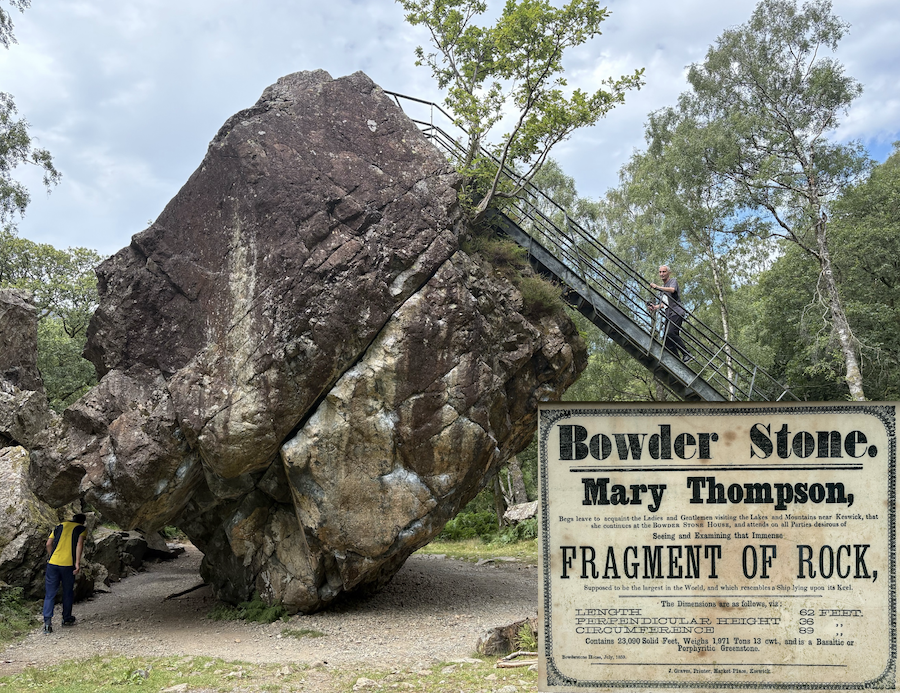
We had a great week and did some touristing as well as running. Here’s a visit to a geological curiosity in Borrowdale.
A huge “thank you” to all the clubs and their helpers and officials who hosted the five events! We’ll be back in 2030 : )