The second in a series of safety tips by Jane Kayley-Burgess
Last time we considered the (very obvious) item of recommended/mandated equipment, a whistle. The reasons were pretty compelling. On to something a bit more controversial but which is a further step towards taking responsibility for you own safety: medical forms and bracelets. Many orienteers take blood thinners, some are allergic to bee stings, penicillin or peanuts, some have a heart condition, or high blood pressure. A lot of people I have spoken to think this is a private matter and does not need to be shared with anyone else. I’m hoping that, after reading this, you will realise how helpful it can be and how you don’t need to shout it from the rooftops, just have accessible information should the need arise.
Complete medical forms and wear a medical bracelet
Someone finds you in the woods. You have collapsed and are unconscious. You might have been stung by a bee and have anaphylaxis. You might have just eaten a cereal bar and had a reaction to peanuts. You may be bleeding and be taking blood thinners. You may be diabetic and require insulin. Helping you best is all about having the right information. What does the person who finds you need to know about any medical conditions you may have and how do they find out?
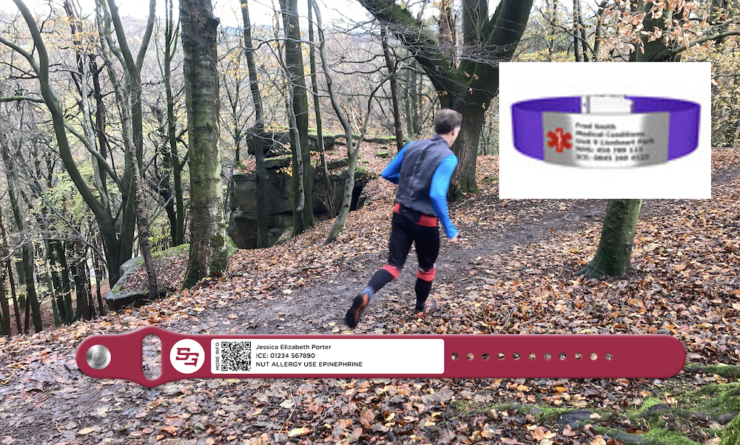
The easiest way is if you are wearing a medical bracelet with the following simple details:
- Your name
- ICE (in case of emergency) phone number and name
- any medical conditions and whether you are carrying medication.
Because you are responsible, value your life and take safety seriously, you are carrying insulin/an epi-pen, swabs to stem bleeding etc. and the person who has found you is now informed and is more likely to do an appropriate thing. If they don’t, the medical professions will certainly be better informed when they reach you.
So today your bracelet snagged on a bramble and was left in a bush. What next? After your finder has phoned 999 (you are collapsed and unresponsive), they call the organiser who will open an envelope you have left at Download which has the same information as your missing bracelet. BOF provide a form for it and it is available on the BOF website and from an easy link on the DVO event details page of every event. If the information is not required, you can pick up the sealed envelope when you download and use it next time you orienteer.
Let’s turn this around slightly. You are the finder. Someone has run into a sharp branch and is bleeding badly. Have they severed an artery? One look at their medical bracelet will inform you that they are on blood thinners and simply applying pressure to the wound site will stem the bleeding (with the sterile swabs the injured person is carrying) until help arrives. Another injured person is unresponsive and their face is swelling up. Again the bracelet tells you that they have an allergy and they carry an epi-pen in their running vest or bumbag. This is probably enough information and forward planning (from them) for you to save their life.
The bracelet and the medical form are such simple and hugely effective safety precautions. The inexpensive bracelets are easily available from The ID Band Co https://theidbandco.com/. If there is a lot of information which won’t easily fit on a standard bracelet, consider https://www.sportsguardian.com/ which has a QR code which, when scanned, will provide further details.